

Does homeowners insurance cover roof leaks in New Jersey? Sometimes, but coverage depends on the cause of the leak and the specific policy. Sudden damage from a covered event may qualify, while deterioration, neglect, or excluded causes may not. Your insurer ultimately determines coverage under your policy.
That distinction matters when water appears inside your home.
A ceiling stain can be unsettling, especially when you have no idea what caused it. You may be wondering whether the roof failed, whether the storm caused it, or whether the problem existed long before you noticed it.
Those details matter because insurance generally responds to covered causes of loss, not simply the existence of a leak.
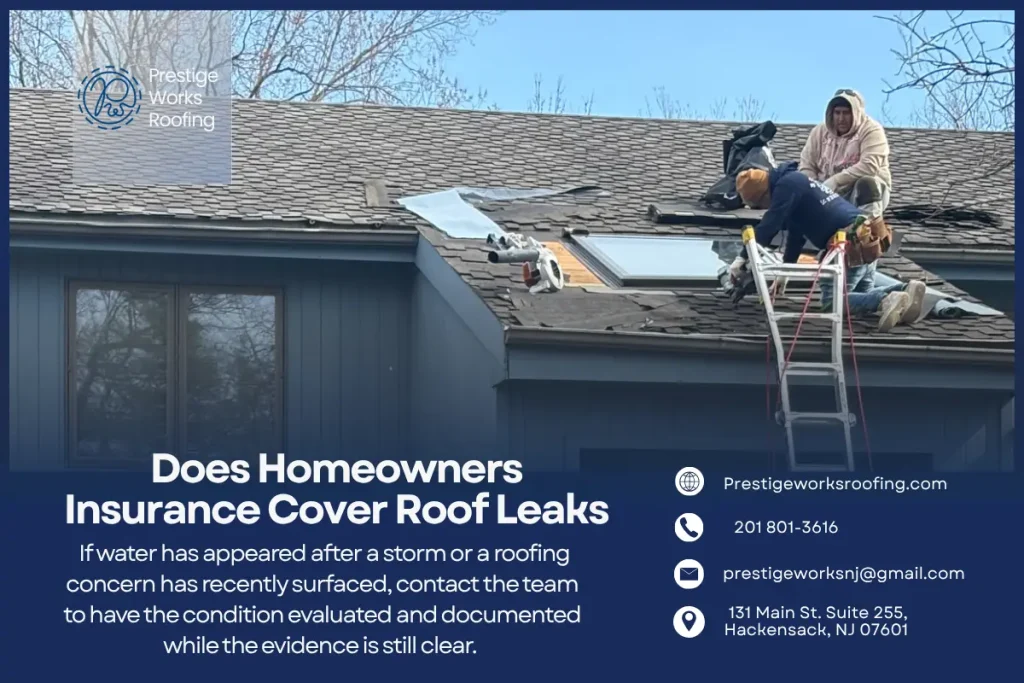
Why Does The Cause Of A Roof Leak Matter To Insurance?
Insurance coverage generally depends on what caused the damage, not merely where water appeared. A roof damaged by a covered storm event can be treated differently from a roof that gradually deteriorated through age and deferred maintenance.
Consider two homes in Bergen County after a severe windstorm. One has shingles that were lifted during the storm, allowing rain underneath. Another has an older roof with deteriorated flashing that has been allowing intermittent moisture for months.
Both homeowners may discover water inside. The circumstances behind those leaks are very different.
New Jersey’s Department of Banking and Insurance explains that homeowners policies commonly cover certain losses from events such as windstorms or hail, while policies also contain exclusions and other limitations.
That is why homeowners should avoid assuming that every roof leak is automatically covered.
What Types Of Roof Damage May Be Covered?
Sudden physical damage from a covered event may qualify for insurance coverage, depending on the policy. Wind, hail, falling objects, and certain storm-related damage can be among the causes addressed by homeowners policies.
The exact language matters. Deductibles, exclusions, endorsements, limits, and the condition of the property can all affect the outcome.
Can A Storm-Damaged Roof Be An Insurance Claim?
Yes, it can be, when the damage resulted from a covered event under the homeowner’s policy. The insurer and its adjuster determine whether the reported damage falls within that coverage.
For example, a strong storm may lift several shingles and damage flashing around a roof penetration. If those conditions can be connected to a covered event, the homeowner may have grounds to report a claim.
Documenting the condition before making permanent repairs can be important. New Jersey’s Department of Banking and Insurance recommends photographing storm damage and reporting losses promptly to the insurer.
What Roof Problems Are Less Likely To Be Covered?
Normal deterioration is different from sudden storm damage. Aging shingles, worn flashing, long-term moisture intrusion, and neglected maintenance may be excluded depending on the policy.
This distinction becomes important with older New Jersey homes. A roof may have experienced years of freeze-thaw cycles, summer heat, wind, and repeated rainfall before a leak finally becomes visible.
The visible leak is therefore not necessarily the moment the damage began.
Homeowners should also be careful with assumptions about mold, interior finishes, insulation, or damaged roof sheathing. Whether those resulting damages are covered can depend on the policy and circumstances surrounding the original loss.
[IMPORTANT: Coverage varies by insurer and policy. This article is educational and should not be treated as an insurance coverage determination.]
How Can You Tell If A Roof Leak Might Be Storm Related?
Look for evidence that connects the roof condition to a particular weather event. Missing shingles, fresh impact marks, displaced flashing, fallen branches, or new openings can provide useful clues.
The timing also matters. A leak that appears immediately after a significant storm deserves a different investigation than staining that has slowly returned over several months.
Still, homeowners should not try to determine coverage from appearance alone.
In Hackensack and surrounding Bergen County communities, older Capes, colonials, and post-war homes can have multiple layers of repair history. A storm may expose an existing weakness rather than create every part of the problem.
What Should You Do When A Roof Leak Appears?
Start by documenting what you can safely see. Photograph interior stains, visible exterior damage, fallen branches, damaged shingles, and other conditions before permanent repairs begin.
Then notify your insurance company or agent if you believe a covered loss may have occurred. New Jersey guidance recommends contacting the insurer promptly and keeping records related to the damage and temporary repairs.
If water is actively entering, temporary measures may be necessary to protect the home from additional damage. Permanent repairs should be coordinated with the insurer’s inspection and claim requirements.
Prestige Works can evaluate the roofing condition and document what the roof is showing. That information can help homeowners have a clearer conversation with their insurer.
Should You Repair The Roof Before Filing An Insurance Claim?
Can You Fix A Roof Leak Before The Insurance Adjuster Arrives?
You can take reasonable temporary steps to prevent further damage, but permanent repairs may need to wait until the insurer has inspected the loss. New Jersey’s insurance guidance specifically recommends temporary repairs when necessary and advises homeowners to save related receipts.
The distinction is important. Covering an opening or stopping active water intrusion is different from replacing the entire roof before the damage has been documented.
If you are unsure what should happen first, speak with your insurer and document the condition carefully.
Where Does Roof Inspection Fit Into The Insurance Process?
A roof inspection helps establish what actually happened. It can identify damaged shingles, flashing problems, roof penetrations, moisture intrusion, and other conditions that may explain the leak.
Prestige Works Roofing & Siding approaches storm-related roof problems by looking for the source rather than simply measuring the visible stain. Their roof repair service specifically addresses leaks, damaged flashing, missing shingles, and storm-related concerns.
That distinction is useful for homeowners because an insurance claim and a roofing repair are two separate questions.
The insurer determines coverage. The roofing professional helps identify and explain the physical condition of the roof.
What If The Roof Needs Repair But Insurance Does Not Cover It?
A denied or excluded claim does not mean the homeowner has no options. It means the repair decision may need to be handled as a maintenance or out-of-pocket roofing project.
If damage is isolated, a targeted repair may be enough. If deterioration affects large areas or multiple roofing components, replacement may become more appropriate.
The important part is separating the insurance question from the construction question. Your roof still needs the right repair, regardless of how the policy responds.
How Can New Jersey Homeowners Protect Their Roofs?
Preventive maintenance can help homeowners understand developing problems before they become larger concerns. Keep gutters flowing, watch for damaged shingles, maintain flashing, and investigate recurring moisture.
After major storms, look for changes from the ground and check accessible attic areas for new staining. Do not climb onto a wet or visibly damaged roof.
Regular roof evaluations can also establish a useful record of the roof’s condition over time. That history can make it easier to distinguish a new event from older deterioration.
Frequently Asked Questions About Roof Leak Insurance
Does homeowners insurance cover an old roof that starts leaking?
Not necessarily. Coverage depends on the cause of the leak and the policy language, with normal deterioration commonly treated differently from covered sudden damage.
Does homeowners insurance cover storm damage to a roof?
It may, depending on the policy and the specific storm-related damage. The insurer determines whether the loss falls within the policy’s covered causes.
Should I call my insurance company or a roofer first?
If you suspect storm damage, documenting the condition and contacting your insurer is important. A qualified roofing professional can separately evaluate the physical damage and explain what needs attention.
Will insurance pay for a full roof replacement?
Not automatically. A covered loss does not necessarily mean the entire roof qualifies for replacement. The extent of covered damage and the policy terms determine what the insurer will consider.
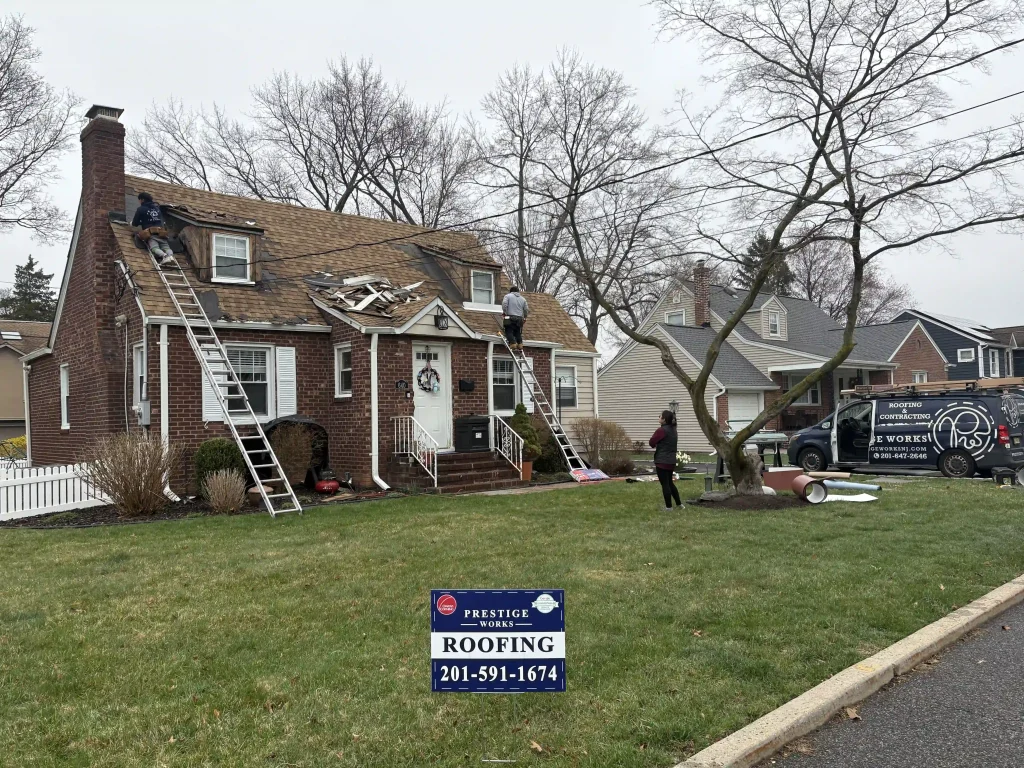
Know What Happened Before Deciding What Happens Next
A roof leak can leave homeowners caught between two uncertainties: what failed and whether insurance will cover it. Those questions are connected, but they should not be confused.
The first step is finding the evidence. A careful inspection can distinguish storm damage from aging, identify the source of the moisture, and clarify whether repair or replacement is actually necessary.
If you are still asking does homeowners insurance cover roof leaks in New Jersey, Prestige Works Roofing & Siding can help you understand the physical condition of your roof before you make the next decision. If water has appeared after a storm or a roofing concern has recently surfaced, contact the team to have the condition evaluated and documented while the evidence is still clear.