

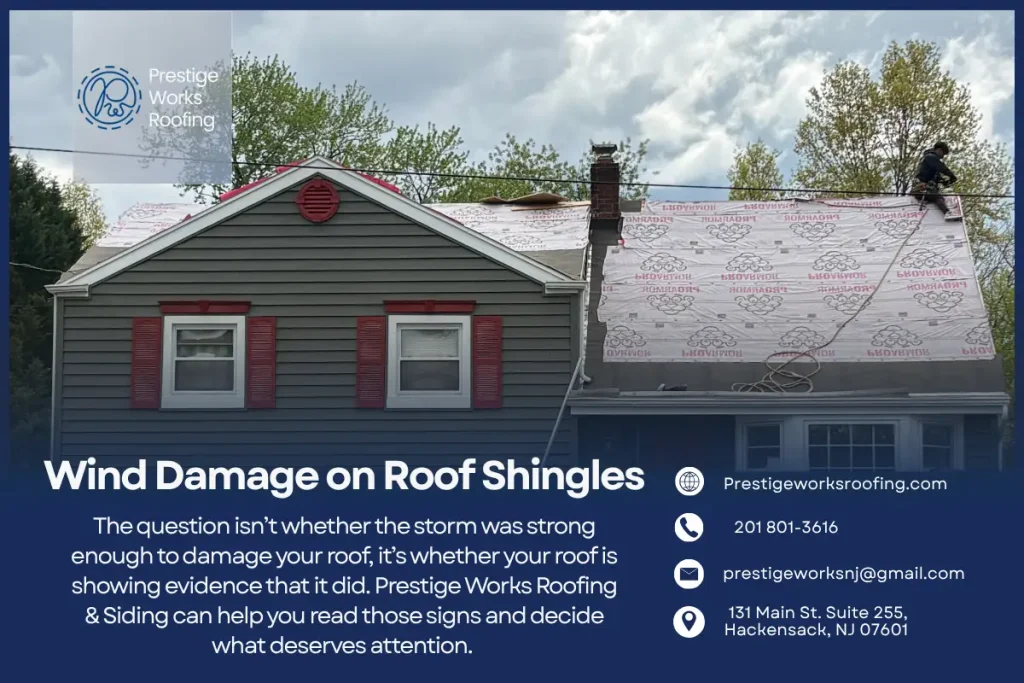
Wind damage on roof shingles can appear as missing, lifted, cracked, or displaced shingles, but damage is not always visible from the ground. Strong winds can also affect flashing, roof edges, and attachments. After a significant storm, a professional inspection can identify problems homeowners may otherwise miss.
A few shingles in the yard are easy to notice. A shingle that lifted and settled back down is not.
That distinction matters because roofing damage does not always announce itself dramatically. Sometimes the roof looks almost unchanged after a storm, while one vulnerable section has been loosened.
The roof keeps the evidence. You just need to know where to look.
Why Can Strong Winds Damage A Roof Without Removing Shingles?
Wind creates pressure across the roof surface that can lift vulnerable shingles and roofing components. The effect is strongest where installation details, material condition, or exposed edges give the wind an opportunity to get underneath.
A shingle can lift without immediately leaving the roof. Once its seal is disturbed, repeated gusts can work the same area again. That movement can eventually expose the layers beneath the shingle to weather.
The Insurance Institute for Business & Home Safety explains that wind creates suction forces across roof coverings and can exploit vulnerabilities in the roofing system.
This is why a post-storm inspection should look beyond obvious blow-offs.
What Does Wind Damage Look Like On A Roof?
The first clues are usually displacement, broken seals, or changes in how shingles sit. Homeowners may notice missing shingles, lifted edges, creased shingles, or pieces of roofing material in the yard.
Look carefully from ground level after a storm. Binoculars can help you examine roof slopes without climbing onto the roof.
Pay particular attention to roof edges, ridges, valleys, and areas around chimneys or vents. These locations contain transitions where several roofing components meet.
A shingle that appears slightly raised may deserve more attention than it seems. The visible movement can indicate that the shingle has lost its intended attachment or seal.
How Can You Tell If Your Roof Has Storm Damage?
Learning how to tell if roof has storm damage requires looking for changes connected to the weather event. Timing, location, and physical evidence all matter.
Start with photographs before disturbing anything. Look for shingles on the ground, new gaps, displaced flashing, damaged vents, or branches that contacted the roof.
Then compare those observations with areas that have historically needed repairs. A new disturbance near an older repair can tell a different story from widespread deterioration.
Can Wind Lift Shingles Without Blowing Them Away?
Yes. Wind can lift or loosen shingles without removing them completely. The National Roofing Contractors Association advises homeowners to check for missing shingles after strong wind events and recommends professional assessment rather than attempting roof repairs themselves.
That distinction is important. A shingle does not have to be sitting in your yard to have been affected.
Which Parts Of The Roof Should You Check After A Storm?
Shingles are only one part of the inspection. Wind can also expose weaknesses around flashing, roof edges, penetrations, and other connected components.
What About Flashing Around Chimneys And Walls?
Flashing is the material installed around roof transitions to direct water away from vulnerable areas. Strong wind can loosen or disturb flashing, particularly where materials meet or have already experienced wear.
Check these areas from the ground for visible movement or gaps. Do not attempt to push flashing back into place yourself.
Can Roof Edges Be More Vulnerable?
Roof edges deserve close attention because wind forces can act differently near exposed edges. Proper installation of edge details helps the roofing system resist those forces.
The NRCA technical guidance has documented the importance of proper starter-strip installation at eaves and rake edges in reducing wind-related shingle damage.
For homeowners, the takeaway is simple: do not inspect only the middle of the roof.
What Happens If Wind Damage Is Left Alone?
Wind damage can create an opening for water even when the roof looks mostly intact. Rain can then reach areas beneath the roofing surface, where moisture may affect underlayment or decking.
That process is often quiet. The first visible sign may be a ceiling stain appearing during a later rainfall.
A homeowner in Hackensack might notice no interior problem immediately after a storm. Several weeks later, wind-driven rain could enter through the same loosened area.
This is why identifying damage early is useful. It gives you the opportunity to address the actual weak point before it becomes a moisture problem.
Should You Repair Or Replace Wind-Damaged Shingles?
The appropriate repair depends on how much of the roofing system was affected. Isolated damage on an otherwise sound roof may only require targeted repairs.
A shingle blow off repair may involve replacing individual shingles and correcting the attachment or surrounding detail. The repair should also consider why the shingle failed in the first place.
Replacement becomes more reasonable when damage is widespread or the roof already has significant age and deterioration. In that situation, repairing individual areas may not restore reliable long-term performance.
The honest answer comes from the condition of the roof as a whole.
What Should A Professional Storm Inspection Look For?
A proper storm inspection should identify visible damage and examine the components connected to it. That includes shingles, flashing, roof edges, penetrations, gutters, and areas where debris may have struck.
The inspector should also distinguish storm damage from ordinary aging. Curling, granule loss, or deteriorated sealant may have existed before the storm and should not automatically be attributed to it.
As our crews see across Bergen County, a roof often has a history that matters. Previous repairs, older materials, and weather exposure can influence how a new storm affects the system.
The National Roofing Contractors Association recommends that homeowners inspect roofs from the ground after severe weather and have professionals assess suspected damage.
How Should New Jersey Homeowners Prepare For Future Storms?
The best prevention begins before the next storm arrives. Keep gutters clear, maintain nearby trees, and address known roofing weaknesses while they remain manageable.
After significant weather, walk around the property and look for changes. Check accessible attic areas for new moisture or staining, particularly below roof transitions.
Do not climb onto the roof to investigate suspected storm damage. A roof can be slippery, unstable, or damaged in ways that are difficult to judge from the ground.
In Hackensack and surrounding Bergen County communities, mature trees and changing weather make exterior observation particularly useful. A few minutes around the property can reveal evidence worth having examined.
Frequently Asked Questions About Wind Damage
How soon should I inspect my roof after a storm?
A visual check from the ground is useful once conditions are safe. If you notice missing materials, unusual displacement, or suspected damage, professional evaluation can help determine what happened.
Can wind damage cause a roof leak?
Yes. Wind can loosen or displace roofing materials, creating pathways for rainwater. Water may then enter beneath the roofing surface and affect materials below.
Does every missing shingle mean I need a new roof?
No. A small number of damaged shingles can sometimes be repaired when the surrounding roof remains sound. The overall condition determines whether repair or replacement makes more sense.
Should I climb onto my roof after a storm?
No. Homeowners should limit post-storm inspection to safe ground-level observations. The NRCA recommends professional assessment when roof damage is suspected.
The Storm Passed. What Did Your Roof Keep?
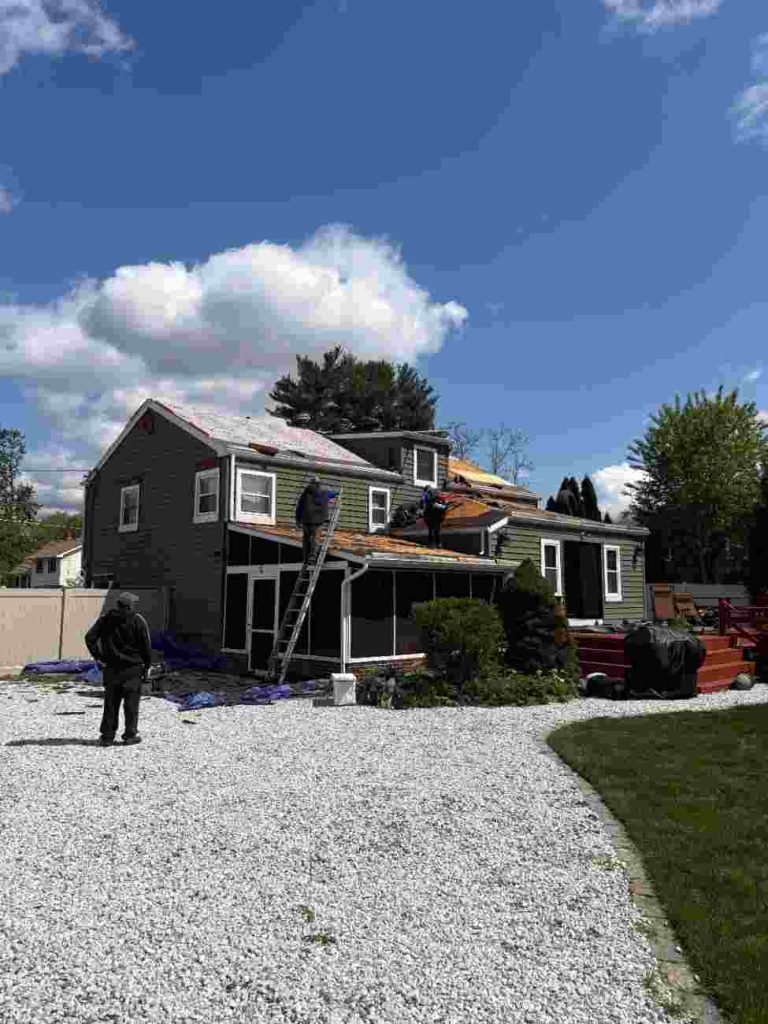
A storm can leave obvious evidence in the yard. It can also leave quieter evidence attached to the roof, where a lifted shingle or disturbed flashing may go unnoticed.
Not every sign means major work is necessary. Some damage calls for a simple repair, while other findings reveal deterioration that deserves a broader conversation.
If you are concerned about wind damage on roof shingles, Prestige Works Roofing & Siding can examine the evidence and help determine what your roof actually needs. The question isn’t whether the storm was strong enough to damage your roof. It’s whether your roof is showing evidence that it did. Prestige Works Roofing & Siding can help you read those signs and decide what deserves attention.