

Choosing a flat roof is not just a material decision. It is a building decision, a budget decision, and a long-term protection decision. If you are comparing options and trying to choose the best flat roof system in Hackensack, the right answer depends on how your property is built, how the roof drains, what sits on top of it, and how much maintenance you want to handle over time.
Flat roofs in Hackensack take a beating from heavy rain, freeze-thaw cycles, humid summers, snow, rooftop equipment, foot traffic, and years of sun exposure. A system that works well for one property may not make sense for the building next door. That is why a good roofing decision should start with a real inspection, not a guess from the ground.
For homeowners, landlords, business owners, and property managers, this guide will help you understand the major options and what should drive your final choice.
Why the Best Flat Roof System in Hackensack Starts With the Property
A flat roof should never be treated like a one-size-fits-all product. Even though people call them flat roofs, most low-slope roofs need proper drainage to move water toward scuppers, gutters, internal drains, or other drainage points. The New Jersey Building Code’s chapter on roof assemblies and rooftop structures addresses roof assembly design, materials, construction, weather protection, drainage, and rooftop structures, which reinforces why flat roof planning has to consider the full system, not just the visible surface. When water sits too long, it can wear down seams, strain flashing, and expose weak areas.
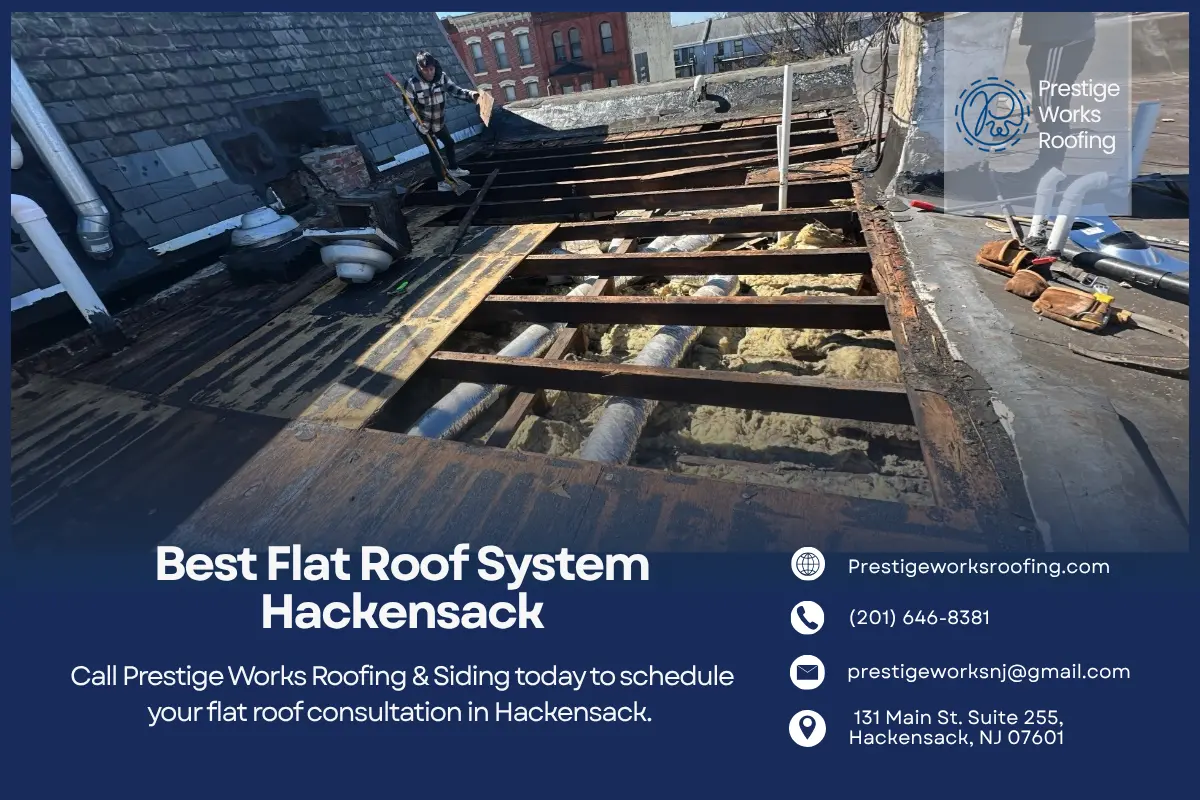
Before you choose a material, your contractor should look at the whole roof system. That includes the membrane, insulation, decking, drainage, flashing, penetrations, parapet walls, edge metal, rooftop units, and interior leak history. A roof over a home addition has different needs than a roof over a restaurant, office, retail space, or apartment building.
This is where many property owners get stuck. You may receive quotes that list different systems, different thicknesses, and different installation methods. If nobody explains why one option fits your building better, you are left comparing prices instead of value.
The best flat roofing systems in Hackensack are selected after the roof’s conditions are understood. That means your decision should come after a contractor explains what is failing, what can stay, what must be corrected, and what system will give your property the strongest long-term protection.
TPO Works Well for Many Modern Low-Slope Roofs
TPO is a popular single-ply roofing membrane for low-slope properties. GAF describes TPO as one of the most popular products used for low-slope roofing, with more than 20 years of field use. Many owners consider it because it offers heat-welded seams, reflective surface options, and a practical balance between performance and cost. A white TPO roof can also help reflect sunlight, which may be useful for buildings that heat up quickly in summer.
TPO can be a strong fit for office buildings, mixed-use properties, retail spaces, and certain residential low-slope roofs. It often makes sense when the roof has wide open areas and the owner wants a clean, efficient system with strong seams.
Still, TPO is not automatically the answer. If your roof has a lot of foot traffic, rooftop equipment, grease exposure, or complex details, the contractor needs to plan around those issues. Walkway pads, careful flashing, secure attachment, and proper edge details can make a major difference.
Think about a small Hackensack storefront with an HVAC unit on the roof. Technicians may walk across the membrane several times a year. In that situation, the system needs more than a good membrane. It needs protection in the areas where real people will walk, work, and place tools.
EPDM Is Flexible, Familiar, And Proven
EPDM is a synthetic rubber membrane that has been used on low-slope roofs for decades. Carlisle SynTec describes EPDM as a resilient synthetic rubber membrane widely used on low-slope roofing projects for more than 50 years in the United States and worldwide.
It is known for flexibility and weather resistance, which can matter in New Jersey’s changing climate. When temperatures swing from freezing mornings to warm afternoons, roof materials expand and contract. EPDM handles movement well when installed correctly.
This option often makes sense for residential low-slope sections, additions, garages, porches, and some commercial properties. It can also work well on buildings where flexibility matters more than reflectivity.
The key detail with EPDM is seam and flashing quality. The roof field may perform well, but leaks often appear around edges, drains, walls, vents, skylights, and mechanical curbs. If those details are rushed, even a proven material can disappoint.
When comparing flat roofing systems in Hackensack, EPDM deserves a serious look if your roof needs a flexible, time-tested membrane and the surrounding details can be handled correctly.
Modified Bitumen Brings a Tough, Layered Approach
Modified bitumen is an asphalt-based flat roof system installed in rolls. The National Roofing Contractors Association includes polymer-modified bitumen, EPDM, thermoplastic membrane systems, built-up roofing, and liquid-applied systems among the major low-slope membrane roof system categories covered in its roofing manual.
It has a more traditional feel than single-ply membranes and can be a practical choice for certain low-slope areas. Some property owners like it because it creates a layered roof assembly with a durable surface.
Modified bitumen may work well for smaller flat roof sections, buildings that need a rugged surface, or properties where the existing conditions support an asphalt-based system. Installation methods can vary, so safety, ventilation, deck condition, and manufacturer specifications matter.
This system should not be chosen only because it feels familiar. A contractor should still review drainage, insulation, roof access, existing layers, and any signs of trapped moisture. A layered roof can be dependable, but only when the roof underneath is ready for it.
For commercial flat roofing in Hackensack, modified bitumen can be part of the conversation when durability, roof size, and building use point in that direction. The final choice should always match the roof’s actual conditions.
PVC May Fit More Demanding Rooftop Conditions
PVC is another single-ply membrane used on low-slope roofs. Like TPO, it has heat-welded seams. PVC may be considered for buildings with more demanding exposure, such as restaurants or properties where grease, oils, or certain rooftop contaminants may be a concern.
A restaurant roof tells a different story than a residential roof. Kitchen exhaust, maintenance traffic, and rooftop equipment can all affect performance. If a property has those conditions, your contractor should discuss whether PVC or another specialized solution makes more sense.
PVC is not necessary for every property, and it may not be the best fit for every budget. But when a roof faces tougher exposure, the system choice should reflect that reality.
This is also where commercial flat roofing in Hackensack benefits from experienced planning. Business properties often need scheduling coordination, safety controls, tenant communication, and a system that limits disruption while still solving the roof problem correctly.
Drainage And Details Often Decide the Winner
Many flat roof failures do not begin in the middle of the membrane. They begin at the details. Poor drainage, open seams, weak flashing, damaged edge metal, clogged drains, soft decking, saturated insulation, and unprotected rooftop traffic can shorten the life of almost any system.
If your roof has ponding water, a new membrane alone may not solve the issue. The contractor may need to improve slope, repair drains, replace wet insulation, adjust flashing, or correct deck problems. That is why the cheapest quote can become expensive later if it ignores the real cause of the roof failure.
A real-life example makes this clearer. A property owner sees water stains inside a second-floor ceiling and assumes the roof needs a patch. During the inspection, the roofer finds old repairs around a rooftop unit, ponding near a drain, and soft insulation beneath the membrane. At that point, a patch may only buy time. The smarter decision may be a replacement plan that addresses drainage and insulation together.
That is the kind of decision-stage guidance property owners need. You are not just asking, “Which roof is best?” You are asking, “Which roof solves the problem I actually have?”
How to Compare Quotes Before You Choose
When you review proposals, look beyond the material name. Ask what the contractor found during the inspection, what system they recommend, and why. Ask how they will handle drainage, flashing, penetrations, edge details, rooftop equipment, and any damaged substrate. Ask whether they will remove the old roof or install over it, and why that approach makes sense.
You should also ask about maintenance. Some roofs need more frequent cleaning, seam checks, drain clearing, or rooftop traffic control. If you own a business or rental property, you also need to think about access, scheduling, and how the project will affect daily operations.
The right contractor should make the decision feel clearer, not more confusing. They should explain flat roofing systems in Hackensack in plain English and connect their recommendation to your actual property.
For commercial flat roofing in Hackensack, that clarity matters even more. A roof replacement affects tenants, employees, customers, equipment, and building protection. You need a contractor who can plan the work seriously from inspection through installation.
Choose a Flat Roof with Confidence
The best flat roof system in Hackensack is the system that fits your building’s drainage, exposure, roof traffic, budget, and long-term goals. TPO may be right for a clean, reflective single-ply solution. EPDM may work well when flexibility and proven performance matter. Modified bitumen may fit certain rugged, layered applications. PVC may make sense for more demanding rooftop conditions.
Prestige Works Roofing & Siding helps property owners make those decisions with careful inspections, clear explanations, and roofing recommendations based on the building in front of them. You do not need a rushed answer. You need the right roof plan.
Start With the Roof, Not the Guesswork
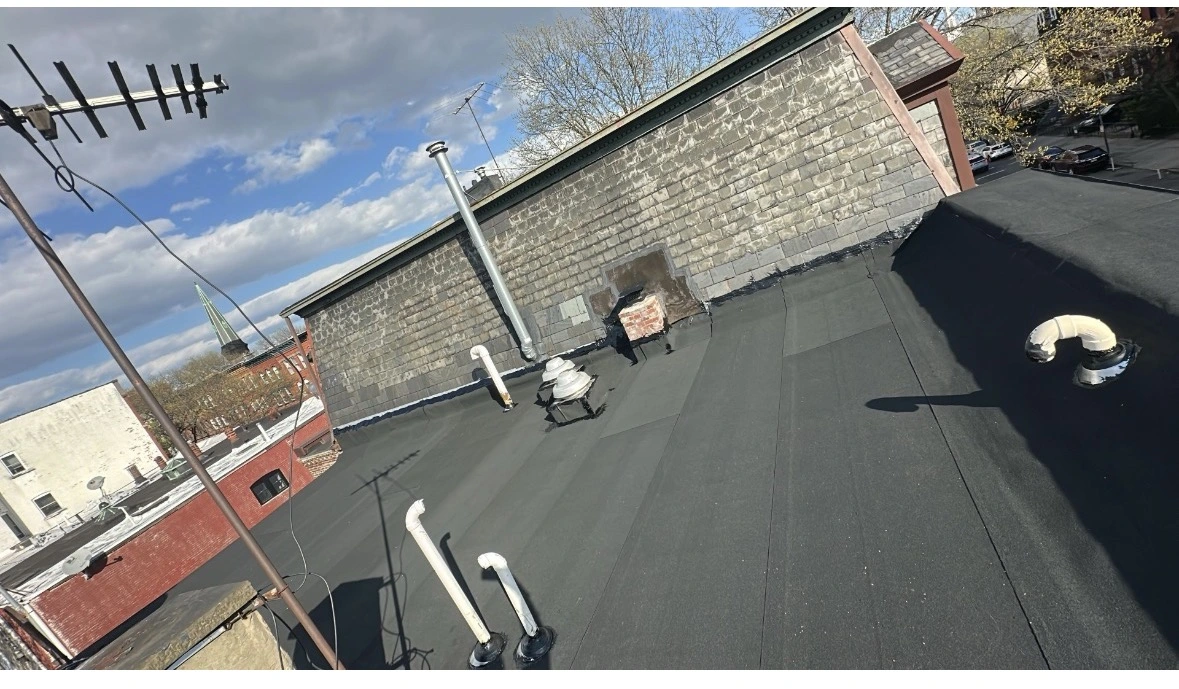
We inspect your roof, explain your options, and help you choose the best flat roof system in Hackensack for your property’s real conditions. We make the next step clear, whether your building needs repair, replacement, drainage correction, or a more complete flat roof plan.
Call Prestige Works Roofing & Siding today to schedule your flat roof consultation in Hackensack.