

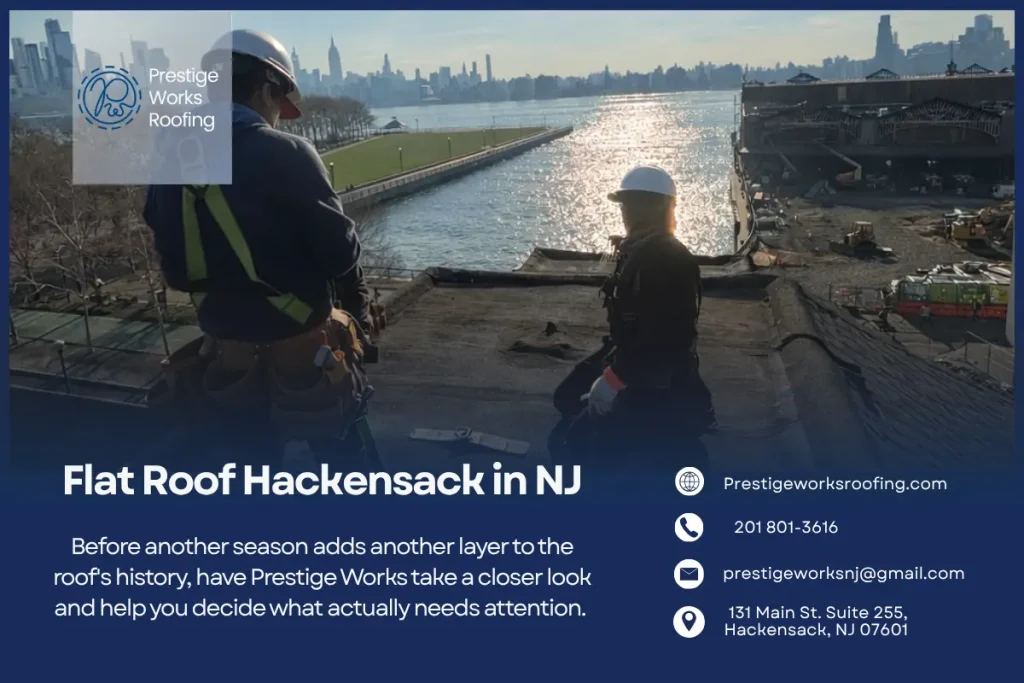
A flat roof in Hackensack, New Jersey relies on carefully planned drainage because water cannot simply run off a steep slope. Small problems around drains, seams, flashing, or parapet walls can hold moisture against the roof longer than intended. On row homes and multi-unit properties, one roofing problem can also involve adjoining structures.
That last part is what makes these roofs different.
A homeowner in a Hackensack row home may notice a ceiling stain after heavy rain. A property owner may find water collecting near the rear of a multi-unit building.
The instinct is usually to look for a hole. With flat roofing, the more useful question is often where the water has been sitting and how it got there.
Why Does A Flat Roof Behave Differently?
Flat roofs are actually low-slope roofs, meaning they have a slight pitch designed to direct water toward drains or other outlets. They are not intended to hold standing water indefinitely.
Water follows the available slope toward a drain, scupper, or roof edge. When drainage becomes restricted or the surface settles, water can remain in low areas. National Roofing Contractors Association recommends positive drainage for low-slope roof systems because ponding water can be detrimental to roofing assemblies.
That creates a different kind of wear pattern. Instead of rain moving quickly away, repeated moisture exposure can keep a vulnerable area wet for longer periods.
On older buildings, the roof surface can also reflect years of repairs, additions, and changing drainage conditions.
What Problems Should Hackensack Row Home Owners Watch For?
Flat roofing problems often begin around transitions rather than across the middle of the membrane. Drains, parapet walls, flashing, seams, penetrations, and roof edges deserve particular attention.
Why Does A Parapet Wall Leak?
A parapet wall is a short wall extending above the roof edge. Its connection with the roofing system creates a transition where water must be directed carefully.
A parapet wall leak can begin when flashing deteriorates or the waterproofing connection weakens. Water then works behind the transition instead of continuing toward the roof drainage system.
The visible stain may appear on an interior wall several feet from the actual entry point. That makes simply sealing the visible area an unreliable long-term repair.
What Happens When A Roof Drain Stops Working Properly?
A blocked or poorly functioning drain changes where water goes. Instead of reaching the intended outlet, water can remain on the roof surface or move toward another low point.
Leaves, branches, sediment, and other debris can restrict drainage. The problem becomes more significant when the roof has limited slope and few drainage paths.
For Hackensack properties surrounded by mature trees, seasonal debris deserves regular attention. Keeping drainage paths clear is basic preventive maintenance, but it protects a much larger roofing system.
How Can You Tell If A Flat Roof Has A Problem?
The first clues are often changes in water behavior rather than dramatic roof failure. Look for recurring puddles, staining, bubbling materials, deteriorated flashing, or water marks near roof transitions.
Inside the property, watch for ceiling discoloration, peeling paint, damp insulation, or recurring moisture after rainfall. These signs can indicate that water is moving through the building envelope.
On a multi-unit property, pay attention to whether the same area repeatedly develops moisture. A recurring problem can provide a useful clue about where the roofing system is allowing water through.
Can A Flat Roof Leak Without An Obvious Hole?
Yes. Water can enter through seams, flashing, penetrations, or deteriorated transitions without leaving an obvious opening. It can then travel beneath the roofing membrane before appearing inside.
This is why flat roof repair often begins with tracing the water pathway. The visible damage is evidence, not necessarily the source.
Why Are Shared Roofs More Complicated On Multi-Unit Properties?
A shared roof multi unit in NJ can involve several living spaces beneath one continuous roofing assembly. That means the physical problem may be limited to one section, even though multiple units are protected by the same roof.
The distinction matters when planning repairs. A localized membrane issue may not justify disturbing the entire roof, while widespread deterioration may require a broader approach.
Ownership and responsibility can also vary between properties. Before making assumptions about who should pay for repairs, owners should review their governing documents and applicable agreements.
From a roofing standpoint, the first job remains the same: determine where the water is entering and how far the damage extends.
What Should A Professional Flat Roof Inspection Examine?
A proper evaluation should look at the roof as a connected water-management system. The inspection should examine the membrane, drainage points, flashing, parapet transitions, penetrations, and visible signs of moisture.
The roof surface also needs to be considered alongside the building beneath it. Interior staining, attic or ceiling conditions, and previous repair areas can provide important clues.
For older Hackensack properties, previous repairs deserve particular attention. A newer patch beside an older membrane can behave differently as temperatures change and materials move.
This is where experience matters more than simply finding the wet spot. The objective is to understand the sequence that created it.
Should A Flat Roof Be Repaired Or Replaced?
Not every flat roof problem calls for replacement. A targeted repair may make sense when the membrane remains sound and the damage is confined to a specific area.
Repair could involve correcting flashing, restoring a seam, addressing a penetration, or clearing a drainage problem. The underlying cause should be corrected at the same time.
Replacement becomes more reasonable when deterioration is widespread, drainage problems affect the broader roof, or repeated repairs no longer restore reliable performance.
NRCA guidance on slope and drainage emphasizes the importance of positive drainage in low-slope roof design.
The honest answer depends on what the roof shows during inspection.
What Makes Flat Roofing Important For Bergen County Properties?
Bergen County properties experience changing conditions throughout the year. Heavy rainfall, snow, freezing temperatures, and summer heat repeatedly expose low-slope roofing materials to different stresses.
Snow and ice also make drainage especially important. When water cannot leave the roof efficiently, changing temperatures can alter how moisture behaves around drains, edges, and other vulnerable areas.
Hackensack’s older residential and mixed-use buildings can add another layer of complexity. Roofs may have been repaired or modified at different points, leaving different materials and transitions across one property.
A roof inspection should account for that history rather than treating every section as identical.
How Can Property Owners Protect A Flat Roof Long Term?
Preventive maintenance begins with drainage. Keep drains, scuppers, and surrounding areas free of debris so water can reach its intended outlet.
Inspect parapet flashing and roof transitions periodically. After significant weather, look for new ponding, displaced materials, or interior moisture.
Do not pressure-wash or puncture the roofing membrane without understanding its construction. Flat roofing materials can be damaged by inappropriate maintenance just as easily as neglected systems.
A maintenance record is also useful for multi-unit properties. Documenting recurring areas can help identify patterns before they become larger roofing projects.
Frequently Asked Questions About Flat Roofs
Are flat roofs more likely to leak than pitched roofs?
Flat roofs manage water differently because they depend on low-slope drainage rather than rapid runoff. Poor drainage, deteriorated seams, and vulnerable transitions can create leak concerns when water remains on the surface.
How often should a flat roof be inspected?
Inspection frequency depends on the roof’s condition, age, exposure, and maintenance history. Properties with recurring leaks or drainage concerns deserve closer attention.
Can ponding water damage a flat roof?
Yes. Persistent ponding can place additional stress on low-slope roofing materials and indicate a drainage problem. NRCA recommends designing and maintaining low-slope systems for positive drainage.
Does a flat roof always need replacement when it leaks?
No. An isolated leak may be repairable when the surrounding roofing system remains sound. Replacement becomes more appropriate when deterioration is widespread or repairs no longer provide reliable performance.
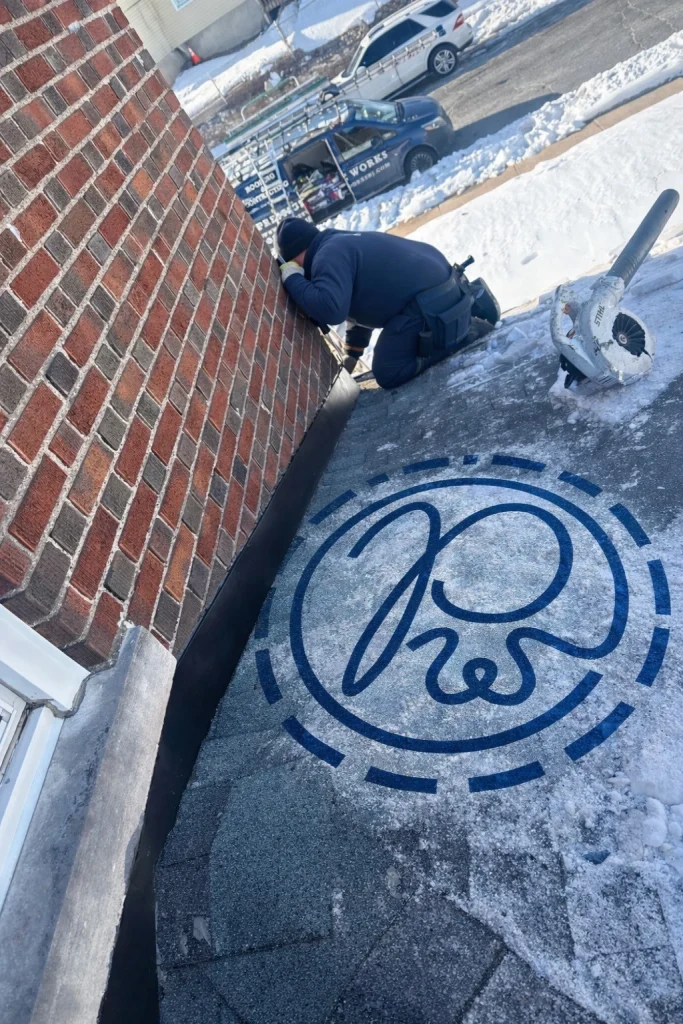
Find The Weak Point Before It Becomes The Whole Roof
A flat roof can hide its problems differently from a pitched roof. Water may linger, move sideways, or enter through a transition far from where the damage eventually appears.
That does not mean every leak is a major project. It means the roof needs to be read carefully before anyone decides what work it requires.
If you own a flat roof in Hackensack, New Jersey, Prestige Works Roofing & Siding can evaluate the membrane, drainage, flashing, and surrounding exterior details to determine what the evidence is showing. Before another season adds another layer to the roof’s history, have Prestige Works take a closer look and help you decide what actually needs attention.