

When water stains appear on a ceiling, the visible spot is rarely the actual entry point. Learning how to find a roof leak in Hackensack starts with tracing water backward through the roof system, not simply looking above the stain. Flashing, valleys, penetrations, and decking can redirect water before it becomes visible indoors.
That is what makes roof leaks so frustrating. You see a brown mark after a storm and naturally look straight above it. Often, water has traveled along framing or decking before finding an opening into the room.

Why Is The Leak Rarely Directly Above The Stain?
A roof leak can appear away from its entry point because water follows surfaces before entering the living space. Once moisture gets beneath shingles or flashing, it can travel along decking, framing, or other materials.
Think of a leak as a pathway rather than a single hole. Water enters at one weak point, follows the easiest route, and becomes visible where that route ends. This is why repairing only the ceiling rarely solves the roofing problem.
The National Roofing Contractors Association notes that leak investigations should verify the actual leakage path before repairs are selected.
What Usually Causes A Roof Leak?
Most residential roof leaks begin around vulnerable transitions rather than the middle of an intact shingle field. Common trouble spots include flashing, roof penetrations, valleys, damaged shingles, and areas where drainage changes direction.
Why Does Flashing Cause So Many Leaks?
Flashing is material installed around roof transitions to direct water away from vulnerable areas. It commonly surrounds chimneys, walls, skylights, and other roof penetrations.
When flashing loosens, cracks, or was installed incorrectly, water can enter behind it. Repeated rainfall can then carry moisture farther into the roof assembly.
Can Gutters Contribute To Roof Leaks?
Yes, drainage problems can increase moisture around roof edges. Clogged gutters can allow water to remain against fascia, roof edges, and nearby exterior materials.
The roof and gutter system work together to move rainwater away from the home. The EPA recommends regular roof gutter maintenance as part of residential moisture control.
How to Find a Roof Leak in Hackensack Without Guessing
Learning how to check for roof leaks starts with safe observations. Knowing how to detect roof leaks requires comparing clues from the attic, ceiling, and ground.
Avoid walking on a wet or steep roof, and document where the stain appears and when it changes. Inside the attic, look for darkened wood, damp insulation, water marks, or staining around penetrations.
Follow those signs uphill when possible, remembering that the entry point may be some distance away. From the ground, use binoculars to look for lifted shingles, damaged flashing, debris-filled valleys, or blocked gutters.
Can You Find A Roof Leak Without Getting On The Roof?
Sometimes. Interior and ground-level observations can reveal useful clues, especially when a leak has a clear pattern. Hidden leaks may still require closer inspection because water can travel beneath roofing materials.
Do not climb onto a wet roof to investigate. A professional can examine the roof safely and trace the suspected pathway.
What Does Professional Roof Leak Tracing Involve?
Professional roof leak tracing starts with the visible symptom but does not stop there. The goal is to connect the interior evidence with the roofing component actually allowing water inside.
An inspection may compare the ceiling stain with attic evidence, then examine the corresponding roof area. The inspector checks shingles, flashing, valleys, penetrations, roof edges, and drainage paths for clues.
Prestige Works Roofing & Siding approaches leaks this way because a patch only helps when the source is correctly identified. Our roof repair guidance emphasizes finding the root cause rather than covering the visible problem.
Consider a second-floor ceiling stain near a chimney. The stain may sit several feet below damaged chimney flashing, where rain enters beneath the roof covering. Repairing the ceiling alone leaves the pathway above unchanged.
When Is a Roof Leak a Repair, Not a Replacement?
A roof leak does not automatically mean the entire roof needs replacement. If damage is isolated and surrounding materials remain sound, targeted repair may be appropriate.
Repair may involve replacing damaged shingles, correcting flashing, sealing a penetration, or addressing drainage. The important part is fixing the cause rather than disguising the symptom.
Replacement becomes more reasonable when leaks are widespread, roofing materials have deteriorated across large areas, or several components are failing together. The recommendation depends on the inspection, not the size of the ceiling stain.
Why Does New Jersey Weather Make Leak Tracing Important?
New Jersey roofs experience heavy rain, snow, wind, and freeze-thaw conditions throughout the year. Each event tests pressure points, especially flashing, valleys, roof edges, and penetrations.
In Bergen County and around Hackensack, older Capes and colonials may have roofing systems shaped by years of repairs. One section can be newer than another, creating different transitions across the same roof.
Wind-driven rain can make leaks misleading because water may enter at a vulnerable transition. IBHS research documents how wind-driven rain can penetrate vulnerable areas of residential roof assemblies.
What Should You Do After Finding A Roof Leak?
Start by documenting the stain, when it appeared, and what weather preceded it. If water is actively entering, protect belongings and arrange a professional roof evaluation.
Do not assume a dry ceiling means the leak is fixed. Roof leaks can be intermittent when the entry point only receives water during particular wind or rainfall conditions.
Regular inspections, clean gutters, and attention to damaged flashing can help identify developing concerns earlier.
Frequently Asked Questions About Finding Roof Leaks
Why is my ceiling stain not directly below the roof leak?
Water can travel along decking, framing, insulation, and other surfaces before reaching the ceiling. The stain shows where water became noticeable, not necessarily where it entered.
What are the most common places for roof leaks?
Common locations include flashing, roof penetrations, valleys, damaged shingles, and roof edges. These areas involve transitions where water must move around different materials.
Should I climb onto my roof to find a leak?
No. Wet or steep roofs create fall risks, and walking on roofing materials can cause damage. Ground-level and attic observations are safer starting points.
Can a small roof leak be repaired?
Often, yes, when the problem is isolated and surrounding materials remain sound. An inspection can determine whether targeted repair is appropriate.
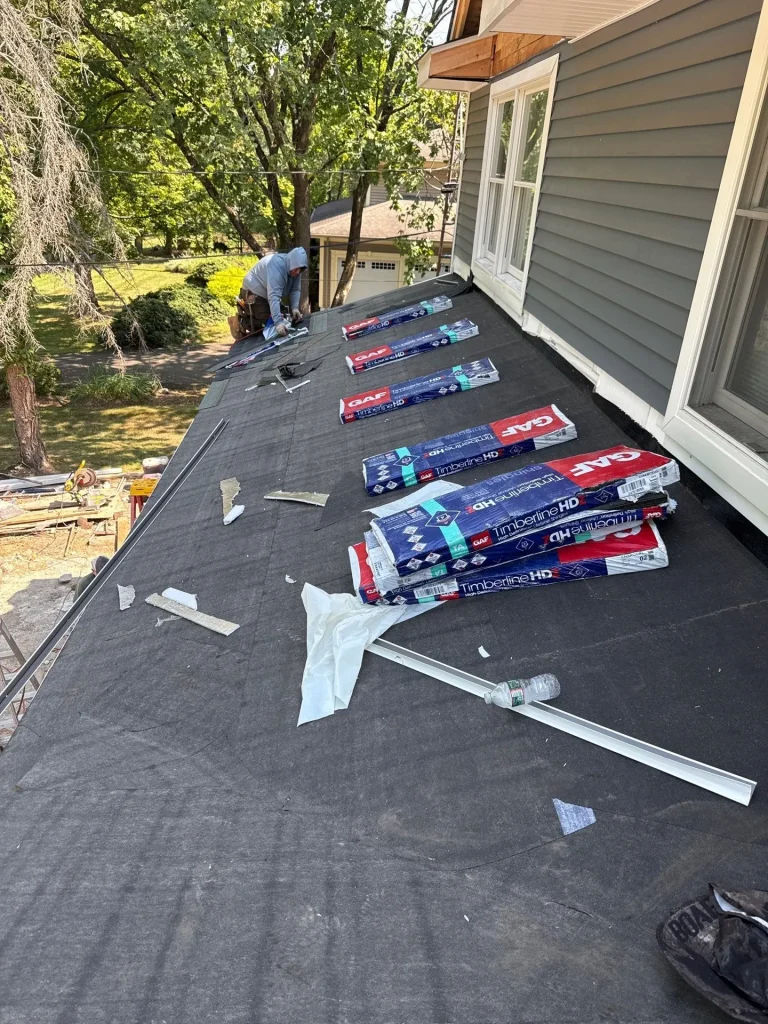
Find The Source Before You Fix The Symptom
A ceiling stain is an important clue, but it is only one piece of the story. Effective roof repair begins by tracing that clue back through the roofing system and finding where water entered.
Some leaks are straightforward repairs. Others reveal aging materials, damaged decking, or a pattern worth investigating further. Finding that distinction early gives homeowners a clearer choice about what to do next.
If you are trying to learn how to find a roof leak in Hackensack, Prestige Works Roofing & Siding can help trace the evidence from the visible stain back to the roofing system. Get in touch with our team before the next rainfall gives the same leak another opportunity to travel.