

A strong storm can turn a normal evening into a stressful home emergency. One minute, you hear rain hitting the windows. The next, you notice water staining the ceiling, shingles scattered in the yard, or a branch sitting across the roofline. When that happens, storm damage roof repair in Hackensack becomes more than a home improvement task. It becomes a decision about protecting your home before the damage spreads.
Hackensack homeowners know New Jersey weather can change quickly. Heavy rain, high winds, hail, falling branches, and freeze-thaw conditions can all expose weak spots in a roofing system. Some storm damage looks obvious from the ground. Some stays hidden until water reaches the attic, insulation, drywall, or electrical areas.
The right response starts with safety, documentation, and a professional roof inspection. You do not need to diagnose every roofing problem yourself. You do need to know what to watch for, what to avoid, and when to call a contractor who can help you move from concern to action.
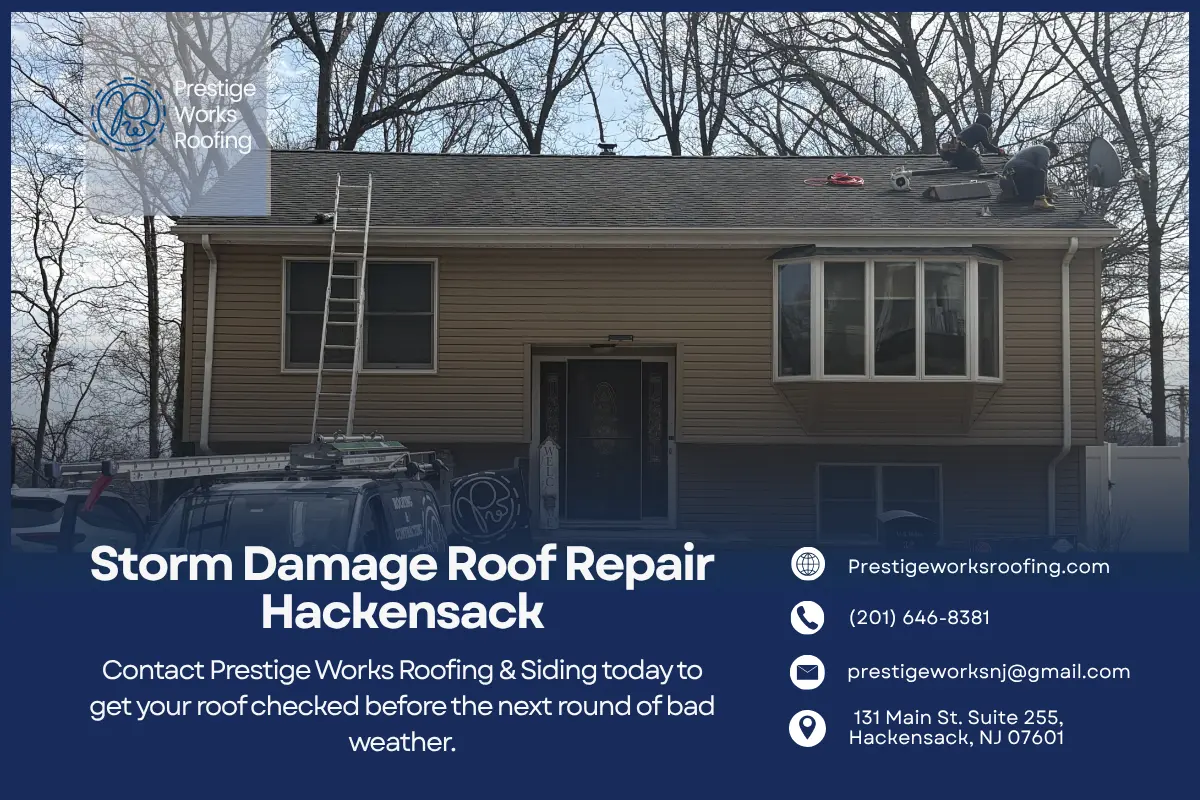
When Storm Damage Roof Repair in Hackensack Cannot Wait
Some roofing problems allow time for planning. Storm damage does not always give you that luxury. If water enters your home, shingles are missing, flashing has lifted, or a tree has damaged part of the roof, you should treat the situation seriously.
The National Weather Service explains that severe thunderstorms can produce hail at least one inch in diameter or wind gusts over 58 mph, and that hail can damage roofs while strong winds can break branches, knock over trees, and cause structural damage..
After a major storm, your first job is not to climb onto the roof. Stay on the ground, look for visible damage, and check the inside of your home for stains, drips, damp insulation, or musty smells. If you see active leaking, move belongings away from the area and contain the water if you can do so safely.
This is when emergency roof repair in Hackensack may be necessary. Temporary protection can help reduce interior damage until permanent repairs can be completed. That may involve tarping, securing an exposed area, or stopping water from entering through a damaged section. The key word is temporary. A tarp can buy time, but it does not replace a proper repair.
What Storm Damage Can Look Like From the Ground
Storm damage does not always look dramatic. A roof can lose a few shingles and still seem mostly intact. A lifted shingle tab may settle back down after the wind stops. A small flashing gap near a chimney may not show itself until the next rain.
Look for missing shingles, bent or lifted flashing, exposed underlayment, displaced ridge caps, damaged gutters, loose siding near the roofline, branches on the roof, and granules collecting near downspouts. Inside, watch for ceiling stains, bubbling paint, attic moisture, or new odors after rain.
Wind can be especially tricky. GAF’s technical guidance on wind-caused shingle damage notes that wind events can cause blown-off shingles, broken sealant bonds, uplifted or creased tabs, and granule loss or punctures from flying debris.
That is why wind damage roof repair in Hackensack should start with a close inspection. A roofer should check whether shingles are still sealed, whether fasteners or decking are exposed, and whether roof edges, valleys, and penetrations have been compromised.
Why Fast Documentation Helps Your Next Step
Once everyone is safe, document what you can see. Take photos of missing shingles, fallen branches, interior leaks, stained ceilings, damaged gutters, and any storm debris around the home. Keep notes on when the storm happened and when you first noticed the damage.
This matters because storm-related roof repairs may involve your insurance company. The New Jersey Department of Banking and Insurance advises residents affected by storms to contact their insurance company or agent, make temporary repairs if necessary to prevent further damage, and keep receipts for emergency repairs. Its claims guidance is available here: New Jersey Storm Damage Insurance Claims Guidance.
A professional inspection can also help you separate cosmetic concerns from functional roofing damage. You want clear findings before you approve work, file documents, or make a larger repair decision. Prestige Works Roofing & Siding can inspect your Hackensack roof, document visible damage, and provide a clear roofing estimate.
If the roof has only minor isolated damage, targeted repair may make sense. If the storm exposed widespread wear, damaged many shingles, or revealed underlying deterioration, replacement may be the better long-term choice.
This is a common real-life scenario. A homeowner calls because one bedroom ceiling has a small stain after a windy rainstorm. During the inspection, the roofer finds missing shingles on the rear slope, lifted flashing near a vent, and brittle shingles across a large area. The leak may feel new, but the storm may have exposed a roof that was already near the end of its service life.
How to Decide Between Repair and Replacement
The decision should come down to roof age, damage severity, leak location, material condition, and whether repairs will actually solve the problem. A newer roof with isolated wind damage may only need focused repair. An older roof with widespread shingle loss, brittle materials, repeated leaks, and failing flashing may need a larger solution.
Ask whether the damage is isolated or widespread. Ask whether the repair will tie into older materials cleanly. Ask whether the same area has leaked before. Ask whether the roof has enough remaining life to justify repair.
If you need wind damage roof repair in Hackensack, you should also ask how the contractor will address lifted shingles that have not fully blown off. Those areas can be easy to overlook from the ground, but they may become leak points later.
Emergency roof repair in Hackensack can stabilize a problem, but it should lead to a permanent plan. Once the immediate risk is controlled, your contractor should explain the long-term options in plain English.
Choosing the Right Contractor After a Storm
Storms often bring urgency, and urgency can make homeowners vulnerable. New Jersey’s Division of Consumer Affairs states that home improvement contractors include businesses involved in repairing, replacing, improving, restoring, or remodeling residential and noncommercial properties.
Before you hire anyone, look for a contractor who communicates clearly, documents the roof condition, explains the scope, and gives you a written estimate. Avoid anyone who pressures you to sign immediately, dismisses your questions, or tells you not to contact your insurance company when you believe the damage may be storm-related.
A trustworthy roofing contractor should not make the process feel mysterious. They should explain what happened, what needs attention now, what can wait, and what repair path makes the most sense for your home.
For emergency roof repair in Hackensack, speed matters. So does judgment. You want a contractor who can protect the property quickly without pushing you into a rushed decision about permanent work.
What a Professional Storm Inspection Should Include
A storm inspection should cover the roof surface, edges, flashing, valleys, vents, gutters, chimney areas, skylights, attic signs, and visible interior damage. The contractor should look for missing shingles, lifted tabs, impact marks, punctures, exposed underlayment, loose ridge caps, damaged pipe boots, and clogged or damaged drainage areas.
If the storm involved high wind, wind damage roof repair in Hackensack should include a careful review of shingle adhesion and edge conditions. Roof edges often take a hard hit because wind can catch exposed corners and lift materials.
The inspection should also connect the roof findings to your next step. You should understand whether the home needs temporary protection, a targeted repair, a broader repair, or a replacement estimate. That clarity helps you make a confident decision instead of guessing under pressure.
Prestige Works Roofing & Siding works with homeowners who need practical guidance after difficult weather. The goal is not to scare you into a project. The goal is to protect your home, explain the damage clearly, and help you choose the repair plan that fits the condition of your roof.
Act Before the Next Storm Rolls In
Storm damage rarely improves on its own. A small opening can let in more water during the next heavy rain. A lifted shingle can become a missing shingle. A minor ceiling stain can turn into drywall, insulation, or mold concerns if moisture continues to enter.
If your roof looks different after a storm, trust that instinct. You do not need to wait for a major leak to request an inspection. A timely evaluation can catch problems early and help you avoid larger repairs.
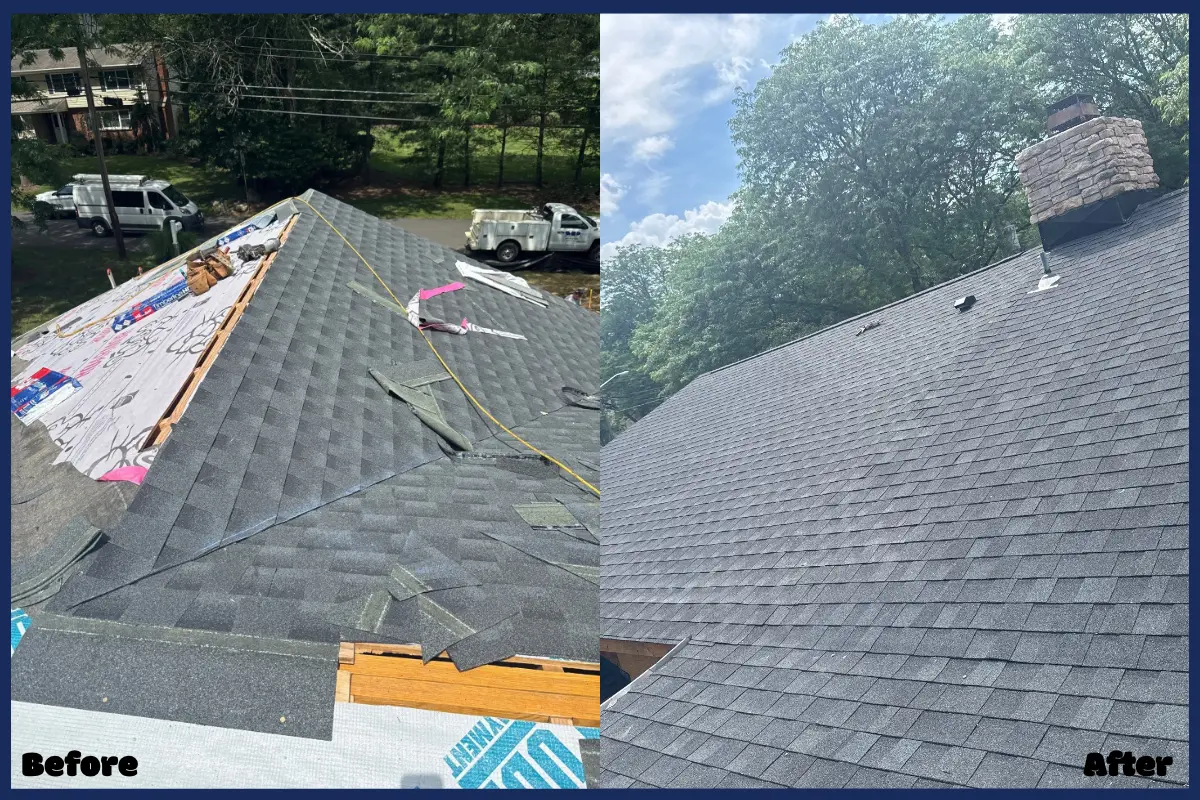
Secure Your Roof, Protect Your Home
We provide storm damage roof repair in Hackensack for homeowners who need clear answers, fast action, and reliable repair guidance after severe weather. We inspect the damage, explain what your roof needs, and help you take the right next step for your Hackensack home.
Contact Prestige Works Roofing & Siding today to get your roof checked before the next round of bad weather.